You're Probably Drinking Too Much Water
Thirst is real. The 8-glass rule isn’t.

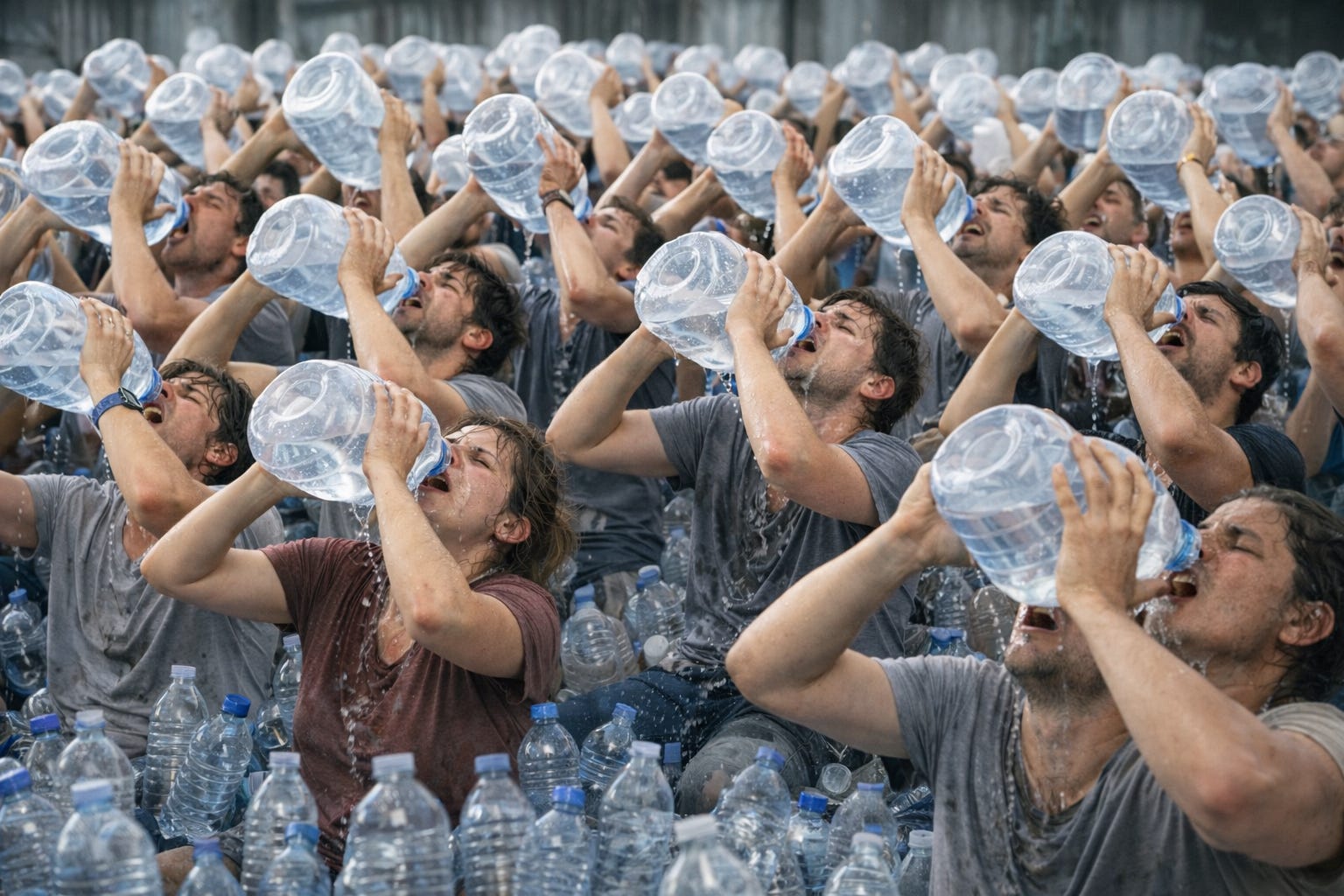
I need to say something that might piss people off: most of you don’t need to force yourself to drink a gallon of water every day.
And you definitely don’t need a $45 Stanley cup with motivational time stamps telling you to “keep chugging.”
Let me explain.
The 8 Glasses Myth Nobody Questions
Somewhere along the way, we all collectively agreed that everyone needs to drink eight 8-ounce glasses of water per day. 64 ounces. Half a gallon. Every single day, no matter who you are, what you weigh, what you eat, or how active you are.
But where did this come from?
The truth? Nobody really knows for sure. Some trace it back to a 1945 recommendation from the Food and Nutrition Board suggesting adults need about 2.5 liters of water daily. But here’s what gets conveniently left out: that recommendation included water from food.
Fruits. Vegetables. Soups. Broths. Coffee. Tea. All of it counted toward hydration.
But the “8 glasses” rule stripped away all that context and became this rigid daily mandate. Now people are forcing down water they don’t even want, peeing every 20 minutes, and feeling guilty if they don’t hit some arbitrary number.
It’s exhausting. And it’s probably unnecessary.
Your Body Already Knows What It Needs
Here’s a wild concept: your body has a built-in hydration system. It’s called thirst.
Dr. Heinz Valtin, a kidney specialist and professor emeritus at Dartmouth Medical School, spent years researching hydration claims. His conclusion? There’s no scientific evidence supporting the “8 glasses a day” rule. Your kidneys are incredibly efficient. Your body regulates fluid balance through thirst signals, hormone responses, and kidney function.
If you’re thirsty, drink. If you’re not, you probably don’t need to.
It’s that simple.
For thousands of years, humans didn’t obsessively track water intake. They drank when thirsty and got significant hydration from food: soups, broths, fresh fruits, vegetables, fermented drinks. Traditional diets in many cultures included water-rich foods rather than constant plain water consumption.
Dr. Satchin Panda’s research on ancestral eating patterns shows that our bodies are designed to regulate hydration through food and thirst cues, not through forcing down liters of water on a schedule.
The Wellness Industry Wants You Confused
We’ve been told that water is the solution to everything:
Want clear skin? Drink more water.
Want to lose weight? Drink more water.
Want to “detox”? Drink more water.
Tired? Dehydrated. Drink water.
Headache? Dehydrated. Drink water.
And the worst part? Most of these claims aren’t even backed by solid research.
A 2018 review in the Journal of the American Society of Nephrology found that for people with normal kidney function, there’s no evidence that drinking extra water improves skin health, aids weight loss, or “flushes toxins” any better than your kidneys already do naturally.
Your kidneys are literal filtration machines. They don’t need you to drown them in water to do their job.
The Stanley Cup Industrial Complex
Let’s talk about the elephant in the room: the trendy water bottle culture is brilliant marketing.
A few years ago, Stanley cups were just regular thermoses. Then TikTok got hold of them, influencers started collecting them in every color, and suddenly a $45 water bottle became essential.
Now there are limited edition drops. Collector’s editions. People camping out at Target. Some people own 10+ cups in different colors.
For what? To drink water?
This isn’t about hydration. It’s about consumerism dressed up as wellness.
The water bottle industry is worth billions. They’ve convinced us that we need expensive, aesthetically pleasing vessels to carry around all day, constantly sipping, hitting arbitrary hydration goals that have no basis in actual science.
And here’s the kicker: most people who obsessively track their water intake don’t actually feel better. They just pee more.
When You Actually Do Need More Water
To be clear: there are absolutely times when you need more water.
Drink more if:
You’re exercising intensely or sweating a lot
You’re in a hot climate
You’re sick (fever, vomiting, diarrhea)
You’re pregnant or breastfeeding
You’re eating a very high-protein or high-sodium diet
Your urine is consistently dark yellow (a genuine sign of dehydration)
But for most people, most of the time? Your thirst mechanism works just fine.
A 2002 study published in the American Journal of Physiology found that healthy adults naturally regulate their fluid intake through thirst and don’t need to consciously track hydration.
Your body knows what it needs. Trust it.
The Overhydration Problem Nobody Talks About
Here’s something the water bottle industry doesn’t want you to know: you can drink too much water.
It’s called hyponatremia, and it happens when you dilute the sodium in your blood by drinking excessive amounts of water. This can cause nausea, headaches, confusion, and in severe cases, serious complications.
Endurance athletes know about this. Marathon runners are told to drink to thirst, not to a schedule.
But people forcing down gallon after gallon? They can experience constant bloating, frequent urination (which disrupts sleep and productivity), and electrolyte imbalances.
More water is not always better.
What I Actually Do
I drink when I’m thirsty. That’s it.
Some days that’s three glasses. Some days it’s more. I don’t track it. I don’t have a motivational water bottle. I don’t set alarms.
I eat water-rich foods: fruits, vegetables, soups. I drink herbal tea. I add electrolytes if I’ve been sweating a lot or eaten very high protein.
And you know what? I feel fine. My skin is fine. My energy is fine. My kidneys function perfectly.
I’m not saying water isn’t important. I’m saying the obsessive tracking, the expensive water bottles, the forced chugging when you’re not even thirsty? That’s not health. That’s marketing.
Trust Your Body
Your body has evolved over thousands of years to regulate hydration. It knows when it needs water. It will tell you through thirst.
If you’re genuinely thirsty, drink. If you prefer your water cold, great. If you like it room temperature, fine. If you want to add lemon or electrolytes, go for it.
But if you’re forcing yourself to drink because an influencer told you to, or because you bought an expensive cup and feel obligated to use it, or because you think it’ll magically fix your skin or help you lose weight?
Stop.
Wellness isn’t about following arbitrary rules that don’t actually improve your health. It’s about listening to your body and doing what makes you feel good.
Not what makes you pee every 20 minutes.
Sam's Wellness Brief: Where hype meets evidence. Research-backed deep dives into wellness trends, free from bullshit.
References:
Valtin, H. (2002) https://journals.physiology.org/doi/full/10.1152/ajpregu.00365.2002
Negoianu, D. & Goldfarb, S. (2008)https://jasn.asnjournals.org/content/19/6/1041
Armstrong, L.E. & Johnson, E.C. (2018). Water intake, water balance, and the elusive daily water requirement. Nutrients.
https://www.mdpi.com/2072-6643/10/12/1928
🔥